
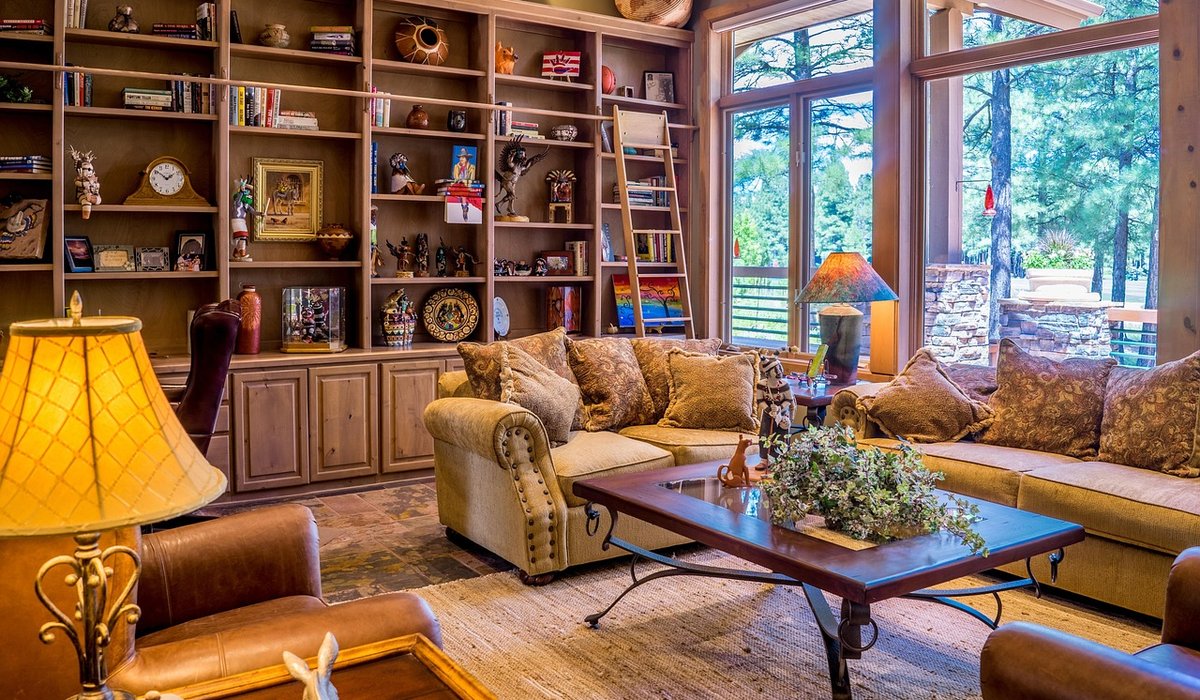
Choosing Rugs to Soften Dark Hardwood Floors
Why Dark Hardwood Needs Softening
Dark hardwood is one of the most elegant backdrops in a British home. A floor stained in espresso, walnut or near-black gives a room instant depth, and it flatters almost anything you place against it. The trouble is that it's hard, cold and acoustically unforgiving. Sound bounces off sealed boards and bare plaster, so a dining room that looks magnificent can feel like a corridor when anyone speaks above a murmur. Walk across it in January in stockinged feet and you'll understand the second problem immediately.
A rug solves both. It absorbs sound, insulates the floor beneath your feet and breaks up a large expanse of dark timber so the eye has somewhere to rest. In a dark luxury scheme, the rug is not an afterthought — it is the element that decides whether the room feels generous or simply gloomy.
Choose the Material for Warmth and Texture
Wool and jute are the two workhorses here, and they do different jobs. Wool is the warmer, quieter option: a hand-tufted or hand-knotted wool rug has a density that deadens echo beautifully and holds its shape for decades. Look for a pile of around 10–15mm for a sitting room, which is soft enough to be cosseting underfoot without swallowing furniture legs.
- Wool — naturally insulating, flame-resistant and slow to show dirt. Undyed greys, oatmeal and warm taupe sit particularly well against dark timber.
- Jute — a flatweave with a lovely dry, grainy texture. Cheaper, hardwearing and excellent in hallways or under a dining table where wool would be impractical.
- Wool and jute blends — the best of both: jute's structure with wool's softness. Ideal for family rooms.
- Viscose or silk accents — use sparingly. A little sheen catches lamplight and makes dark floors feel richer, but pure viscose marks easily.
Let Texture Contrast the Dark Floor
Dark boards are smooth and reflective. A rug should be the opposite. A chunky loop, a bouclé or a subtle rib in the weave gives the floor something to push against, and that contrast is what reads as luxury rather than as a colour match. If you choose a dark rug on a dark floor, the two surfaces can merge into one heavy mass; a deep charcoal wool rug with a visible loop will hold its own far better than a flat, inky felted one.
Pile height matters too. Anything above 25mm feels sumptuous but is difficult to vacuum and can trip up dining chairs. Anything below 5mm reads as contract flooring. Between 8mm and 18mm is the sweet spot for most homes.
Use a Light Border to Define the Seating Area
This is the single most useful trick in a dark room. A rug with a pale border — a slim band of ivory, cream or soft grey wool, perhaps 5–8cm wide — draws a clear outline on the floor and tells the eye exactly where the seating area begins and ends. It works with an otherwise dark rug, keeping the scheme moody while stopping it from bleeding into the boards.
Borders also solve a practical problem. On near-black flooring, the edge of a dark rug is almost invisible from a standing height, so guests step off it unexpectedly and the room feels unsettled. A light band removes that ambiguity entirely. If you already own a borderless rug, a plain pale wool runner cut and whipped along the edges will do the same job.
Get the Size and Placement Right
Too small is the most common mistake, and it makes a generous room look mean. Aim for the rug to sit at least 30–45cm in from the walls, and always keep the front legs of sofas and armchairs on it — all four legs if you can manage it.
- Small sitting room — 170 x 240cm, front legs on, fireplace surround clear.
- Standard sitting room — 200 x 300cm, all seating fully on the rug.
- Large or open-plan room — 250 x 350cm, or two rugs used deliberately to zone seating and dining.
- Dining room — allow 60–70cm of rug beyond each table edge so chairs stay on it when pulled out.
Underlay, Upkeep and the Finishing Touches
Always buy underlay. A felt and rubber crumb underlay of 8–10mm adds cushioning, cuts noise further, protects the timber from grit and stops a wool rug creeping across a polished floor. It also makes a modest rug feel considerably more expensive.
Rotate the rug twice a year so sunlight and footfall wear evenly, and vacuum with the pile rather than against it. Blot spills immediately — dark hardwood shows water marks, so deal with them before they dry. Finally, consider the finishing layer: a brass or aged-bronze floor lamp, a low bowl of something green, and a tray of candles all catch the light and lift the dark floor beneath them. Get the rug right and the rest of the scheme will fall into place around it.
tag: Textiles

Priya Nair Author
Mix linen, cotton and velvet cushions in tonal shades to build depth and make a dark bed feel inviting and comfortable.
YOU MAY ALSO LIKE
Layering Bedding for a Luxurious Dark Bedroom
Jul 6
10Heavy fabrics in charcoal or ink can frame a window beautifully, but consider light loss and choose linings that insulate.
read more
Selecting Curtains for Dark Walls and Small Windows
Jul 2
10Start with one room, test paint samples and build depth through texture, lighting and carefully chosen furniture rather than rushing.
read moreInteriors
-

ERRIC CATONA
Avoid flat finishes, poor lighting and too many competing colours to keep dark walls sophisticated instead of oppressive or gloomy.
May 19, 2016 at 5.12 pm
Reply
ERRIC CATONA
Dust regularly, touch up scuffs promptly and clean with gentle products to preserve the depth and finish of dark surfaces.
May 19, 2016 at 5.12 pm
Reply -
ERRIC CATONA
Use deep walls with lighter textiles and warm lighting to stop a compact sitting room feeling closed in or oppressive.
May 19, 2016 at 5.12 pm
Reply
Paint
Your email address will not be published.