
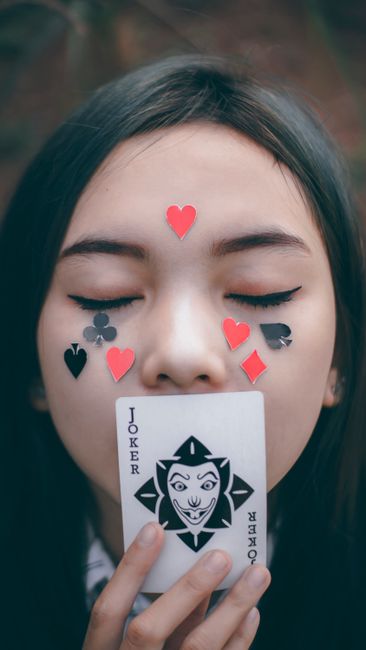
The Real Difference Between Luck and Skill in Casino Games
You sit down at a poker table, look at your hole cards, and feel that familiar rush. Across the felt, a slot machine is flashing its lights, promising a life-changing jackpot. Both are forms of gambling. But are they the same? Not even close. The line between luck and skill in casino games is blurred, but it's the most important distinction a player can understand. Get it wrong, and you'll lose money chasing the wrong dream. Get it right, and you'll play smarter, longer, and with a clear head.
The truth is, every game sits somewhere on a spectrum. On one end, pure chance—like roulette or a spin of the reels. On the other, games where your decisions directly impact the outcome over time, like poker or sports betting. Knowing where your game falls changes everything about how you should approach it.
Pure Luck: Where the House Always Wins (Eventually)
Let's start with the obvious. Slots, roulette, craps, and most table games are games of independent trials. Each spin, roll, or deal is random and unaffected by what happened before. The house edge is baked into the math. For example, European roulette has a 2.7% house edge thanks to that single zero. American roulette doubles it to 5.26% with the double zero. Slots vary wildly, but a typical online slot might have a return-to-player (RTP) of 96%, meaning the house keeps 4% of all money wagered over millions of spins. This is explained well on เว็บสล็อต.
Here's the kicker: no amount of 'skill' can change the odds of a single spin. You can't predict a random number generator. You can't 'feel' when a machine is hot. It's all luck. But—and this is crucial—luck doesn't mean you're helpless. You can still manage your bankroll, choose games with better RTP, and avoid sucker bets. That's not skill in the game itself; it's skill in how you manage your entertainment budget.
- Key takeaway: In pure-luck games, your only real decision is how much you're willing to lose. Treat it as the cost of entertainment, not an investment.
- Example: A player who sticks to blackjack with basic strategy reduces the house edge to under 1%, but that's still a luck game because the cards don't care how smart you are.
Skill-Based Games: Where Your Brain Matters
Now shift to poker. Yes, there's luck in the short run—you get dealt aces or rags, and the river can crush you. But over thousands of hands, the better player wins. That's skill. Poker is a game of incomplete information, probability, psychology, and decision-making. You can fold, raise, bluff, or call. Each choice has an expected value, and the sum of those choices separates winners from losers.
Sports betting is similar. If you simply bet on your favorite team every week, you're gambling on luck. But if you study stats, injury reports, weather, and line movements, you're applying skill. The best bettors in the world grind out a 2-5% return on investment over years. That's not luck; that's expertise.
Even in slots, there's no skill—but in video poker, there is. Jacks or Better, for instance, has a known optimal strategy that can push the RTP above 99% with perfect play. Most players don't play perfectly, so the house still wins. But the skilled player has a real edge over the unskilled one.
The Grey Zone: Games That Blend Both
Not every game fits neatly into a box. Blackjack is a perfect example. The cards are random, but your decisions—hit, stand, double, split—matter enormously. A player using basic strategy can lower the house edge to 0.5% or less. A card counter can even gain a slight edge over the casino, though that's a skill most never master. So blackjack is a hybrid: luck in the short term, skill in the long term.
Similarly, daily fantasy sports and some eSports betting involve research and analysis. They're not pure casino games, but they sit in the iGaming ecosystem and reward knowledge. The more you know, the less you rely on chance.
Here's a quick rule of thumb:
- If the outcome is determined by a random draw with no decisions after the bet, it's pure luck. (Slots, roulette, craps)
- If you make decisions after the bet that affect your odds, it's a skill game. (Poker, sports betting, blackjack)
- If the game has a fixed strategy that improves your odds but doesn't guarantee a win, it's a blend. (Video poker, blackjack)
Why This Matters for Your Wallet
Understanding the luck-skill spectrum isn't academic. It changes how you should bankroll, practice, and set expectations. If you're playing slots, you should never expect to win in the long run. The math is against you. Your goal should be to maximize playtime and entertainment value. Set a loss limit, stick to it, and treat any win as a bonus.
If you're playing poker or betting on sports, you can actually improve. That means you should invest in learning. Read books, watch training videos, track your results. The more skilled you become, the more your long-term results shift from luck to merit. But beware: even skilled players go on losing streaks. Variance is a beast. A winning poker player might lose for 50,000 hands. That's not a sign to quit; it's the cost of doing business.
- Bankroll tip: For luck games, use a separate 'entertainment' fund. Never chase losses.
- Skill tip: For poker, keep a detailed log. Review hands. Find leaks. Your edge comes from plugging those leaks.
- Mental tip: Don't confuse a lucky streak with skill. The worst thing a slots player can do is think they've 'figured out' the machine.
The Rise of Skill-Based Slots and Hybrid Games
The iGaming industry is evolving. Developers are experimenting with skill-based slots that let you influence outcomes—like choosing a symbol or timing a bonus. These are still rare, and the house edge often remains high, but they blur the line further. Some jurisdictions even require skill-based games to have a certain percentage of skill involved. It's a response to a generation raised on video games where agency matters.
But don't be fooled. A 'skill-based' slot with a 95% RTP and a tiny skill element is still a losing proposition for the vast majority. The skill component is often just a psychological hook to make you feel in control. True skill games, like poker, have no fixed house edge—you play against other players, and the casino takes a rake. That's a fundamentally different model.
So before you buy into the hype, ask: does my decision actually change the expected value? If not, it's luck dressed up as skill.
Final Thought: Play the Player, Not the Game
At the end of the day, the smartest gamblers are the ones who know which game they're playing. If you're in it for entertainment, embrace the luck. Set a budget, enjoy the ride, and don't kid yourself about winning big. If you're in it to win, gravitate toward skill games. Put in the hours. Study. Accept that even then, luck will slap you around sometimes.
The casino doesn't care whether you're lucky or skilled. It only cares that you keep playing. Your job is to know the difference—and to make sure the house edge, whether from the game or from your own ignorance, doesn't eat you alive. Play smart. Play aware. And never bet more than you can afford to lose.
tag: iGaming

James Alderney Author
Balance dramatic charcoal walls with oatmeal bedding and subtle textures for a restful scheme that still feels sophisticated and modern.
YOU MAY ALSO LIKE

Creating a Calm Bedroom with Charcoal and Soft Neutrals
Sep 23
10Pair rich forest green with antique wood and brass details to bring depth to period properties without overwhelming original features.
read more
Using Deep Green Accents in Traditional British Homes
Sep 21
10Understand undertones and finishes before committing to black, from soft charcoal to inky hues that suit different light levels.
read moreInteriors
-

ERRIC CATONA
Paint large sample patches and observe them throughout the day to see how natural and artificial light changes the colour.
May 19, 2016 at 5.12 pm
Reply
ERRIC CATONA
Fill cracks, sand surfaces and use the correct primer so deep colours dry evenly without patches or visible roller marks.
May 19, 2016 at 5.12 pm
Reply -
ERRIC CATONA
Combine inherited pieces with clean-lined contemporary seating to create a collected look that feels warm and intentional.
May 19, 2016 at 5.12 pm
Reply
Paint
Your email address will not be published.